Farm Dairy Effluent (FDE) is now more than ever a valuable resource in terms of it’s nutrient value as fertiliser prices continue to rise. Here you will find information on Tasman’s FDE rules and how to comply, and guidance on where to start when you are designing and modifying new and existing FDE systems.
Good effluent management is a combination of having a well-designed effluent system and processes in place to ensure that effluent is applied to pasture in the right amount and at the right time. The overall objective is to minimise the risk of contamination of water bodies from stored and applied FDE.
In the Tasman District, applying effluent to land is a permitted activity that may be undertaken without resource consent if it complies with all conditions contained within Rule 36.1.2.3 of the Tasman Resource Management Plan (TRMP)- Discharge of Bird or Animal Effluent(external link)
If the discharge of Dairy Effluent does not meet the permitted activity rules, resource consent is required (see Related Pages - below)
Staying compliant is best achieved by putting Good Management Practices (GMPs), clear procedures, and sound day‑to‑day operations into place. If you’re new to GMPs, or didn’t arrive here from our main GMP page, you can click here to go back and learn more about all 21 industry‑agreed practices. GMPs 16–19 focus specifically on the management and operation of farm dairy effluent (FDE) systems, helping minimise the risk of surface and groundwater contamination from stored or applied effluent.
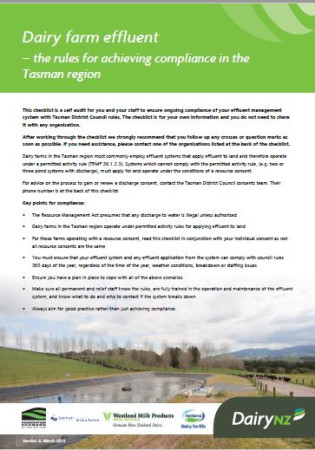
The checklist provided on the right was developed by DairyNZ with input from Tasman District Council, Federated Farmers, Westland Milk, and Fonterra. Its purpose is to support farmers in meeting effluent discharge rules every day of the year.
This checklist brings together the requirements of Rule 36.1.2.3 of the Tasman Resource Management Plan (TRMP), along with practical good‑practice tips to help you maintain ongoing compliance. You are encouraged to work through the checklist with your staff, use it to self‑audit your effluent system, and follow up on any areas that need improvement.
Avoiding the loss of nutrients and bacteria from the soil profile into groundwater or surface water is the key environmental outcome of a well-designed effluent irrigation system. Having the capacity to store effluent before it is applied to land means effluent doesn’t have to be applied during wet periods when the risk of surface ponding and runoff is high. This greatly reduces the risk of overflows to surface water, and plant nutrient uptake is maximised. These objectives can be achieved by:
Whether you are well underway with establishing a new dairy farm, or investing in a new system, or modifying an existing effluent system you will quickly find that there is no one best FDE system. Just like you, each and every farms’ situation and needs are unique.
This is why Council supports and advocates that farmers align themselves with DairyNZ’s Farm Dairy Effluent Design Standards and Code of Practice. These standards and design codes are your industry’s best practice when it comes to the design of any FDE system and contains good practice advice for the collection, storage, and land application of FDE.
Dairy NZ has important information on designing systems, managing and operating systems, and determining effluent storage volumes available on their website.
DairyNZ | A Farmers guide to managing FDE.pdf
DairyNZ | Odour management for storage ponds.pdf
Does your effluent system tick all the boxes? Find out with the FDE system design:
DairyNZ | Planning the right FDE System for your Farm
DairyNZ | FDE Design Standards & Code of Practice
IPENZ | Practice Note 21: Farm Dairy Effluent Ponds (PN21)
DairyNZ - Effluent Pond Seepage Testing Code of Practice - September 2025 replaces Section 8.6 of the IPENZ Practice Note 21
IPENZ | Practice Note 27: Dairy Farm Infrastructure (PN27)
Find a local accredited FDE design company: Effluent Directory