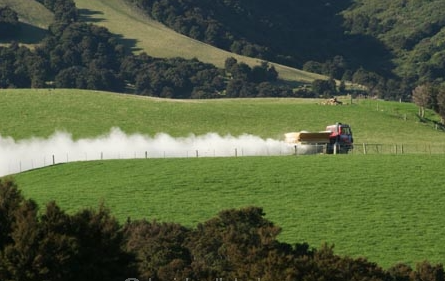
Under the National Environmental Standards for Freshwater (NES-FW), synthetic nitrogen fertiliser means:
Any solid or liquid product that contains more than 5% nitrogen by weight
Applied to land to provide nitrogen for plant growth
Common examples include:
Urea
Diammonium phosphate
Sulphate of ammonia
Products made from plant or animal waste that are minimally processed, such as composts, soil treatments, or organic fertilisers that have only been composted, mixed, dried, or pelleted, are not considered synthetic nitrogen fertiliser.
On 1 July 2021, the Government introduced a rule under the Essential Freshwater package to help protect water quality. This rule places a cap on the amount of synthetic nitrogen fertiliser that can be applied to land grazed by livestock.
If your farm is larger than 20 hectares and has grazed pasture, you can’t apply more than 190 kilograms of synthetic nitrogen per hectare each year.
This limit applies in two ways:
There is a small exception for land used to grow annual forage crops.
If you can’t meet this limit, you’ll need to apply for a resource consent.
*Farm in this case refers to a contiguous landholding – that is, each adjoining or touching land parcel is considered part of the same farm, while land parcels that don’t border others are considered separate farms.
DairyNZ has developed this useful ‘Decision Tree’ that clearly sets out whether you will require a resource consent.
The nitrogen cap applies to any synthetic nitrogen fertiliser used on land that is grazed by livestock, no matter:
Which animals graze – cattle, sheep, goats, pigs, deer, poultry, or others
How long they graze – a few days or all year
What’s not covered?
The cap does not apply to land used for non-grazed arable crops or horticultural crops.
If you graze stock on a farm larger than 20 hectares, you must record your synthetic nitrogen fertiliser use each year. The recording period runs from 1 July to 30 June. For example, the 2025 period is from 1 July 2025 to 30 June 2026.
For dairy farmers:
If you use the N-Cap portal to report your nitrogen use, this spreadsheet will automatically calculate the totals you need to enter at the end of the year.
Help Guides for the Haweye app can be found:
For help with using the N-Cap reporting tool, the developers have released a series of tutorial videos.
If your farm cannot meet the 190 kg N/ha/year cap (at either the property or hectare level) or you have any questions, please contact our Duty Planner:
They can discuss your options and advise whether you need to apply for resource consent for a non-complying activity.
Your Fert or Farming Rep may also be able to help with strategies to reduce synthetic nitrogen use and bring your farming practices into compliance with the Regulations.
Check Your N-Cap Info
You can use HawkEye, MyBallance, or the N-Cap webform to view and download a PDF summary of the details you (or your rep) entered for your farm.
This summary shows everything you’ve approved for submission (your 'submitted data') to the N-Cap data store, which is used for reporting to councils and the Ministry for the Environment.
Where Does Your Data Go?
Your submitted data goes straight to the N-Cap data store and helps councils check if farms are meeting the nitrogen rules.
Regional summary data (without farm contact details) is shared with MfE and system admins to track progress.
Councils keep your submitted data for compliance purposes.
Questions About Your Data?
If you have any questions about the information held for your farm, please contact our Compliance Team:
If you didn’t buy or apply synthetic fertiliser between 1 July 2025 and 30 June 2026, please record your synthetic nitrogen use as ‘zero’ in HawkEye, MyBallance, or the Regional Sector N-Cap webform.
This same rule applies for any year you don’t use synthetic nitrogen fertiliser.
You don’t need to send us your receipts, but under the Regulations you must keep them on file (or any other purchase documents) in case the Council asks to see them.
The Ministry for the Environment’s guidance says dairy farmers must provide records of all synthetic nitrogen fertiliser purchased during the year. The N-Cap reporting systems are set up to capture this information:
Sometimes fertiliser costs are shared between a farm owner and a sharemilker, either by splitting an invoice or each buying separately for the same property. What matters for reporting is the application rate of synthetic nitrogen on pastoral land, not how the fertiliser was purchased or paid for.
Make sure you record the total application rate for all synthetic nitrogen fertiliser used on the grazed area, and only record it once for each contiguous landholding. Keep your physical purchase receipts on file so they’re available if the Council asks to see them.
With the National Environmental Standards for Freshwater in place since 2020, keeping records of synthetic nitrogen fertiliser use is now part of your due diligence when buying or selling a farm.
If you used or bought synthetic fertiliser between 1 July 2025 and 30 June 2026, record the amount in your fertiliser supplier’s tool (HawkEye or MyBallance) or in the Regional Sector N-Cap webform. If you have records from the previous owner, include those too, your full record for the next season will also be required.
If you didn’t use or buy synthetic fertiliser during that period and don’t have records from the previous owner, simply record your synthetic nitrogen use as ‘zero’ in HawkEye, MyBallance, or the N-Cap webform. You’ll still need to keep a complete record for the next season.
The short answer is no, you only need to enter your data in one system.
If you buy fertiliser from Ravensdown or Ballance, you can submit records for both companies through either of their tools. Each system can record fertiliser purchased from another company and any fertiliser stored on-farm.
If you prefer to use the N-Cap Webform, that’s fine too, you don’t need to record the same information in HawkEye or MyBallance.
The preferred way of recording synthetic nitrogen use is through one of the fertiliser company portals –HawkEye or MyBallance. If you are not signed up with either of these, then you can use the N-Cap Webform online tool provided by the Regional Sector.
If you cannot access any of these tools, then the best way forward is to contact Tasman District Council's Compliance Team on 03 5438400 or email:
They’ll help you figure out another way to provide the information.
Last modified: