Waka Kotahi has recently issued a handy guide for cyclists, helping everyone to stay as safe as possible. The key points are:
You can check out the full guide here.(external link)
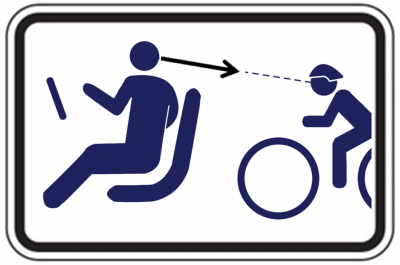 This simple technique has been used in the Netherlands for many years and it helps reduce the risk of opening your car door in front of a cyclist.
Drivers and passengers each use their far hand to open car door. As you reach across for the door handle you are forced to swivel in your seat. You then automatically look in your at mirror can easily check for bikes or other traffic.
If you are involved in, or see, a cycle crash or near miss, please use this online form to tell us about it.
The form helps us gather data about cycle crashes on our roads. If we have more information, we can direct resources to make it safer for cyclists.
The cycle crash reporting information is useful for:
The New Zealand Transport Agency has produced a Road Code for cyclists.(external link)
Cycling information from Waka Kotahi NZ Transport Agency(external link)
A bike that fits you well and is in good shape makes all the difference. Get the right gear for the job and you’ll be grinning your way around town.
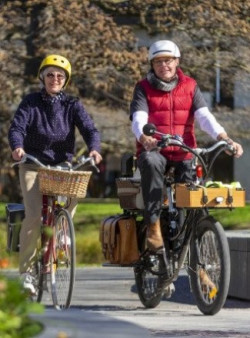 You don’t need an expensive state-of-the-art bike, but your bike will need to be safe, comfortable, and the right size for you.
Carefully consider how you want to use your bike. Is it primarily for transport, or will you want to use it for mountain biking, trail riding or road biking?
It’s best to try before you buy to get the feel for a few different types of bikes and see what suits you. You can borrow one from a friend, hire a bike or go into your local bike shop for a chat, test ride their bikes and see what accessories are available.
If you have a bike that's not been used for a while, consider taking it to your local bike shop to check it’s safe and roadworthy.
You’ll also want to consider some other gear, from the essentials and legal requirements, down to some practical optional items:
Dealing with punctures
If you ride regularly, at some point you may get a puncture. The most important thing is to have a plan for what you will do when that happens.
You might be able to hop on a bus with your bike to complete your journey. Puncture repair kits are also easy to carry, so you might choose to learn how to fix a puncture so you can carry on riding.
Spare inner tubes are small, easy to carry and relatively quick to change, so some people carry a spare tube and keep a puncture repair kit at home so that they can fix tubes in warmth and comfort.
Many people also find that investing in puncture-resistant tyres is a game-changer.
More information
Check out these videos from Christchurch City Council for lots more helpful information.
529 Garage helps the cycling community to reduce bike theft. You can register bike details and serial numbers, in the event your bike is stolen you can notify the 529 Garage community by creating an alert. Then if the thief tries to sell the stolen bike, potential buyers can search 529 Garage to check if the bike is stolen. This will help to deter thieves as they find they have a much smaller market to sell to. Members of the 529 Garage community and Police can check bikes and if they are stolen, notify the owner and reunite them with their bike.
Bike registration is free and a 529 Shield sticker is an optional, tamper-resistant, weather-resistant decal that has a unique, seven-character ID code. It adds an extra identifier and layer of protection for your bike. The 529 Shield sticker can be purchased from all good bike stores, we recommend you put one on your bike in a visible location. Always report bike thefts to Police, if the theft is happening now call 111 otherwise call 105 or go online to 105.police.govt.nz.
Bicycle registration for the life of your bike | 529 Garage (project529.com)
Last modified: