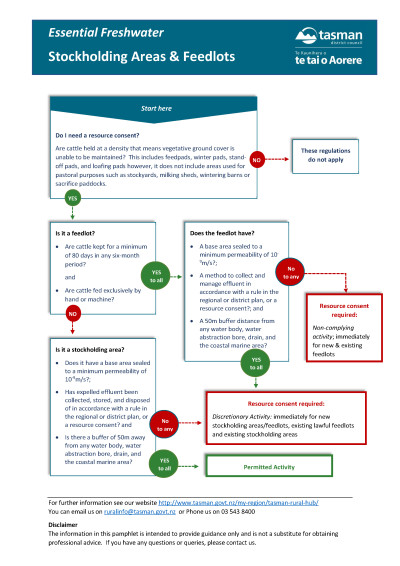
If not managed well, Feedlots and Stockholding Areas can harm water quality. Here you’ll find information on the different types of stock feeding and holding areas, and whether they are
permitted or
require consent under the
National Environmental Standards for Freshwater (NES-F) A summary is also shown in the flowchart on the right.
What are the Rules?
Under the NES-F Rules, feedlots and stockholding areas must:
- Be set back from waterbodies
- Have a sealed base that meets permeability standards
- Collect and manage effluent properly
Feedlots
Feedlot Rules
Your feedlot does not need resource consent if:
- 90% of the cattle are younger than 4 months, or
- 90% of the cattle weigh 120kg or less.
If you don’t meet these conditions, you’ll need resource consent.
Stockholding Areas
A stockholding area is a place where cattle are kept so densely that grass or ground cover can’t grow. Examples include:
- Feed pads
- Winter pads
- Stand-off pads
- Loafing pads
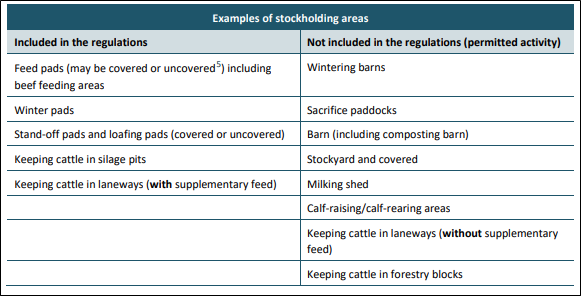
Source: MfE Stock Holding Definition and Guidance 2022
Stockholding Area Rules
You can use land for a stockholding area without resource consent if:
- At least 90% of the cattle are under 4 months old or weigh less than 120kg.
Holding Larger or Older Cattle
Land can also be used for holding larger and older cattle in a stockholding area (not in a feedlot) without consent if you meet all these conditions
-
- The base is sealed to a minimum permeability of 10⁻⁹ m/s
- Effluent is collected, stored, and disposed of according to the Tasman Resource Management Plan (TRMP) Rule 36.1.2.3 - Discharge of Animal Effluent to Land
- The area is at least 50m away from any waterbody, bore, drain, or coastal marine area
Freshwater Farm Plans
In the future, having a certified Freshwater Farm Plan may mean you won’t need resource consent—provided the plan shows that its effects are no greater than the current conditions.
However, Central Government is reviewing the Freshwater Farm Plan regulations and has paused their rollout nationwide until the review is complete. This means FWFPs are not yet available to farmers in Tasman.
Until then, if you can’t meet the permitted activity rules, you will need resource consent.
More information
👉 Check out MfE's Stockholding definition and guidance here
Need help?
Have questions about the new regulations for feedlots and stockholding areas, or how they apply to your farm?
Our Catchment Advisors are here to help.
📧 Email us at : [email protected]