

First there was a storm, then another which compounded problems, and then as we were starting to gain traction, yet another bout of heavy weather threatened – fortunately we dodged a bullet the third time.
Some of the numbers associated with dealing with various aspects of these weather events make sobering reading.
The following numbers are by no means a full and final tally of the work that’s been carried out by our staff, contractors, and out-of-town workers brought in to help during and following the storms.
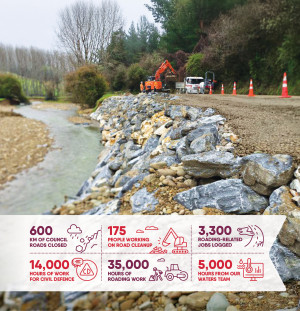
At one single point at the height of the event, more than 600 kilometres, or more than one third of our council roading network, was closed, with around 175 people working directly on the road cleanup.
More than 3,300 roading-related jobs were logged due to the storms.
In storms one and two, there were 18 different companies working with us to restore the roading network back to a point where vehicles could use it safely. In the first three weeks of the cleanup, it included an estimated 35,000 hours of work.
In emergencies like these, our Council staff step in as part of Civil Defence Emergency Management, working two 12-hour shifts per day, seven days a week.
For the first two storms, 7,000 local staff hours were spent in these roles, supported by up to another 7,000 from our partner agencies and people brought in from out of town to assist.
Then our waters team also clocked up close to 5,000 hours of work dealing with issues during the first two storms.
But the work is by no means over and will continue for many months. A specialist team is based at our office in Richmond, coordinating the recovery from these events.