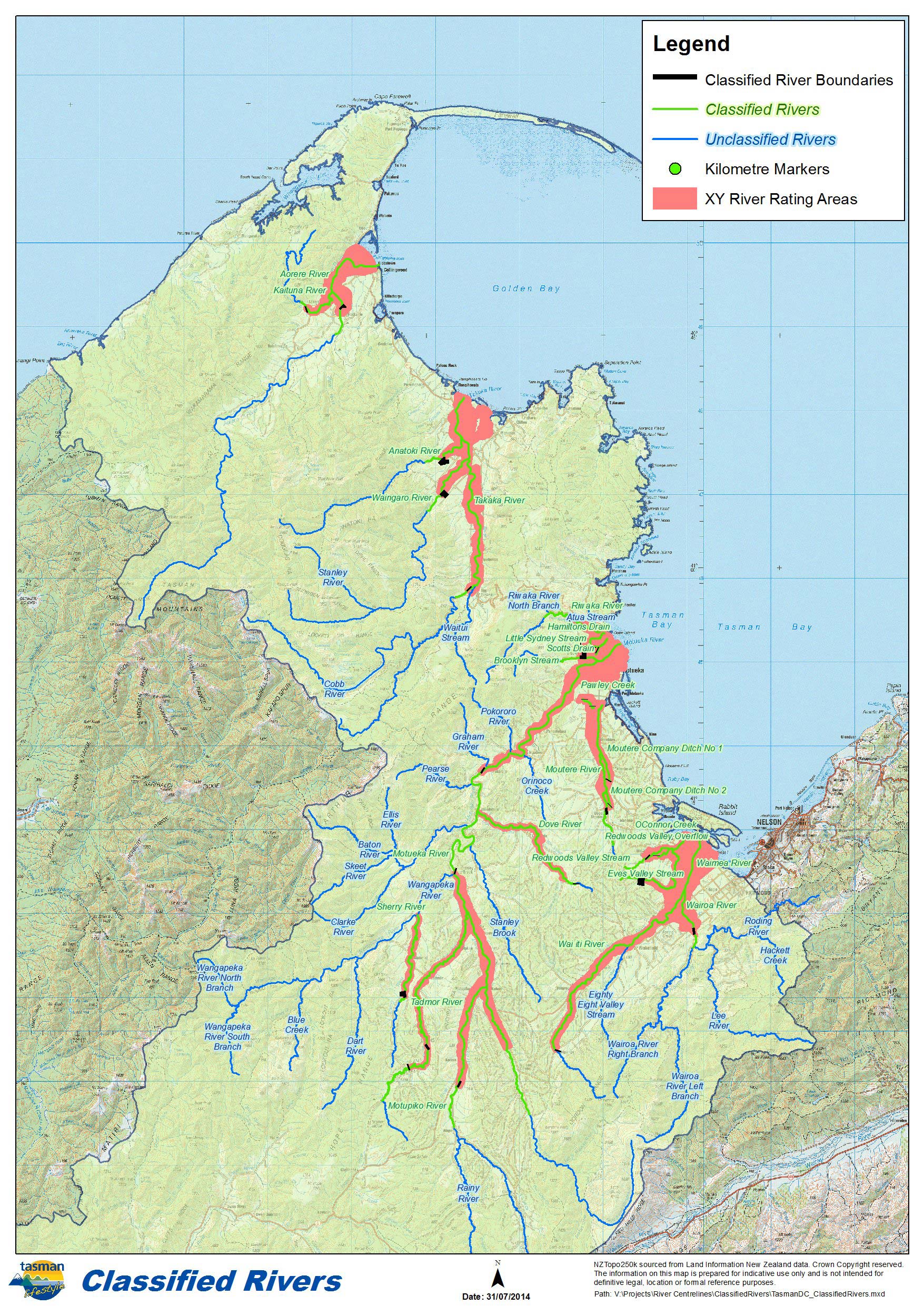
We maintain 285 kilometres of the region's rivers.
Contact us for more information.
We have been hard at work on Tasman’s rivers since the June-July 2025 major flood events, and we have now established a programme of work covering the next 20 months that will progressively address flood-damaged areas.
Please note: We can't guarantee that all riverworks outlined below will be carried out. Riverworks necessarily have a large component of reactiveness.
Planned works may have to be deferred or may no longer be viable with emergency or flood response works taking priority at any time. Work is also subject to funding availability.
These are inspected monthly to check they are operating as intended.
Little Sydney Tide Gate - the screens on this gate are removed ahead of any significant wet weather as they become clogged and impede the water flow.
This work is to correct undesirable river alignments and protect banks and adjacent infrastructure and land from river erosion following a flood or high flow event.
It may include relocation of river gravel within the channel to realign the low flow channel, incorporation of tied or buried willows, bank reshaping and placement of rock either as discrete structures (such as groynes) or longer lengths (termed rip rap).
Historically gravel extraction from river beds was the main source of aggregates.
Studies carried out by the Council and Landcare Research Ltd have shown that in general there is limited sustainable replenishment of gravel in our main rivers. Consents to extract gravel are now focused on land-based sites such as quarries and open pits.
Some river management projects are required to relocate gravel within sections of a river particularly where single stream channels are controlled by rock work. Typically you'll see these around meandering bends. The huge cost of maintaining the rock work necessitates training works to stabilise the active channels and minimise the need for additional rock works.
Historically gravel extraction from river beds was the main source of aggregates. However, local studies have shown that in general there is limited sustainable replenishment of gravel in our main rivers. Consents to extract gravel are now focused on land-based sites such as quarries and open pits.
Some river management projects are required to relocate gravel within sections of a river particularly where single stream channels are controlled by rock work. Typically you'll see these around meandering bends. The huge cost of maintaining the rock work necessitates training works to stabilise the active channels and minimise the need for additional rock works.
We maintain a number of modified waterways/drains in the Riuwaka area such as the Little Sydney, that require silt and vegetation removal from time to time. Also some smaller waterways like Eves Valley Stream and the Redwood overflow on the Waimea plains.
Generally we don’t spray these smaller waterways to control vegetation, but use physical removal or mulching to keep them open. Over time and especially following flood events these waterways can silt up significantly so require excavation.
The Waimea and lower Wai-iti Rivers have a high incidence of illegal dumping. The Motueka highway bridge and the river bank behind Tākaka township are other areas where this activity periodically takes place.
NOTE - The solid waste budget pays for this work but it is carried out under the river maintenance contract.
Outside of the X and Y rated rivers, we have traditionally supported landowners with subsidised funding for agreed river control or flood protection works. However, given the scale and widespread impact of the July 2025 weather event, we are currently reviewing this programme. The focus of the review is to identify needs across rivers outside the X and Y classifications, and to determine what form of support will be available going forward.
Other than the creation of new river control assets through planting or rock work, no capital works have been identified other than works to improve the performance of the Little Sydney tidal gates (details of which have yet to be finalised, to do with the inlet screens which require frequent removal due to heavy rain warnings).
There is the potential to include some minor stopbank upgrades i.e. repairing stock damage or fencing improvements into the programme should there be a lull in flood events.