

A 6.5 magnitude earthquake strikes along the Waimea Fault in the Eighty Eight Valley. Strong shakes ripple across Nelson Tasman. Communities are faced with damaged buildings, disrupted lifelines, injuries and potentially casualties.
This was the scenario put to the Nelson Tasman Emergency Management staff in a recent training exercise.
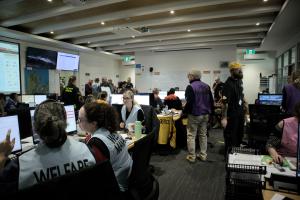
A local state of emergency is declared. The Emergency Operations Centre, ordinarily sitting empty, fills with staff from both Councils, emergency services, and representatives from multiple agencies. Everyone is here for a 12-hour shift.
Before the laptops open, the first order of business: vests.
Each function wears a colour. The Controller, who leads the response, is in white. Red is the Response Manager, the Controller’s right hand, making sure teams understand the action plan.
Dark green is staff safety and iwi is light green, available for tikanga and manaakitanga practices. Blue represents intelligence, building a clear picture of the incident and how it might develop.
Planning wear pink, responsible for the shift’s action plan. Orange is operations, managing staff and volunteers to deliver in the field; their team includes Lifelines and Utilities, which covers roads, water and power.
Yellow is logistics, for resources, personnel and facilities. Public Information Management wear purple, handling external communications and media. Light blue is welfare, running Civil Defence centres and meeting community needs – food, water, shelter.
Finally, Recovery is in grey, because recovery starts the moment an emergency begins.
Partner agencies fill out the room: National Emergency Management Agency, Police, Fire and Emergency, NZTA, the Defence Force, MPI, Health NZ, and St John.
A Zoom call begins in a quietened room. It’s the multi-agency briefing, a look at where things stand and the day’s objectives. NZTA provides updates on state highways. Infrastructure teams report on water networks, buildings and local roads. Health NZ outlines the hospital’s capacity.
Then back to the controlled chaos. The media are calling, looking for the latest information. The Minister for Emergency Management and the Prime Minister are on their way. The power, water and telecommunications are all down.
After 12 hours on the go, a 7.00 pm handover sees a fresh team take on the next 12-hour shift. In a real event, many Civil Defence staff would be worried about their own homes and families too. And the public would be looking for help and answers.
This is how we prepare. How do you?
Visit nelsontasmancivildefence.co.nz(external link) to get prepared.