

Summer has been a game of two halves in Tasman, but as the District starts to dry out, there should be minimal disruption to water users.
Rainfall for February was a mixed bag, with many sites receiving less than half of their average rainfall for the month, while other sites – particularly in the Riuwaka and lower Motueka catchments – exceeded their average for the month.
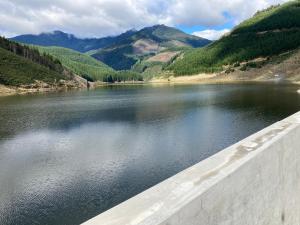
Frequent wet weather in recent months has enabled us to keep the Waimea and Wai-iti dams full.
The Cobb Dam at Upper Tākaka is 75% full, generating power at regular intervals while also keeping flushes going down the Tākaka River. Regular flows down the Tākaka River have the added benefit of increasing the flow at Te Waikoropupū Springs.
We have moved into a drier spell of weather, and the weather forecast models are suggesting that this will be the dominant weather pattern through to April. Fortunately, the harvesting of fruit and hops has started, so water demand in some areas will decline.
River flow levels at the Wai-iti have been dropping slowly but are now at a level where we have begun water releases from the Wai-iti Dam to supplement the flow.
Tasman’s Dry Weather Taskforce has also implemented water restrictions for the first time this summer in February, affecting consent holders in the Motupiko and the Rainy water management zones. Water restrictions have also been extended to Waimea Dam unaffiliated consent holders.
However, we have been able to avoid restrictions for urban water users on a council water supply and affiliated Waimea Dam consent holders because of the Waimea Dam water releases. The current Waimea Dam levels are such that it would provide water for all the affiliated water permit holders for the rest of the summer season.
To really put things into perspective, if we did not have the Waimea Community Dam releasing water at present, Richmond (including those in Nelson supplied via the Richmond water supply), Hope, Brightwater, and Māpua/Ruby Bay households and businesses would be at Phase C water restrictions. This would have meant: no watering the lawn, no filling or topping up a pool, no water for play, only washing your car with grey recycled water, and watering your veggie gardens/fruit trees/flowers/trees/planters every second day only. And, without any more rain in the coming days, next week it would likely have led to more severe restrictions.