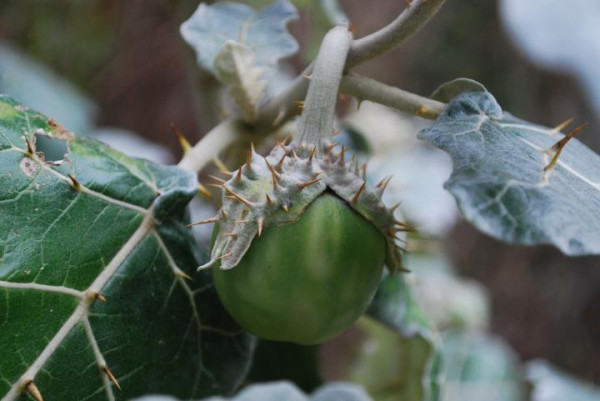
The white-edged nightshade (Solanum marginatum) is native to North Africa, but over time has made itself quite at home in Aotearoa New Zealand.
It’s not a major pest, but like a Moroccan tagine that’s been left too long, it has the potential for some serious side effects.
This perennial shrub is listed as a progressive containment pest species in our region due to its potential to inhabit pastureland, forest margins and coastal areas.
Once established, white-edged nightshade forms thick bushes that stock cannot pass through or eat, and it also prevents the establishment of native seedlings.
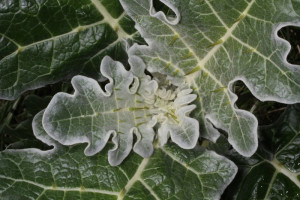
The white-edged nightshade is closely related to the woolly variety. It has spiky white stems and oak-shaped leaves with white edges, green uppers and white undersides.
Each leaf has prominent white veins with vicious-looking prickles on both surfaces.
The berries are poisonous to humans and livestock, and when plants are disturbed, fine hairs are released as a dust that can cause extreme irritation of the respiratory tract.
Although the fruit is not particularly attractive to birds or other animals, this is one possible method of dispersal. Most spread occurs through the movement of the fruit in water or when soil containing the seeds is moved.
If you have one growing at home or have seen it around the District, please get in touch with our Biosecurity team on 03 543 8400, or at [email protected].