

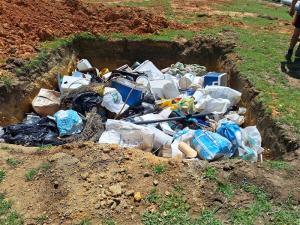
If you live on a rural property, the idea of having a rubbish pit to dispose of farm or household waste might seem to be a convenient way of tidying up.
However, when it comes to dumping or even burning large quantities, we’re encouraging everyone to consider how they can reduce the amount and subsequent effect of what goes in the hole.
We recommend using a skip or taking rubbish to the nearest Resource Recovery Centre. However, if you do have an on-farm dump, here are some points to ponder:
Ensure your farm dump is not in a gully, is at least 50m from a surface waterbody or a domestic water supply bore, and at least 1m above the average winter level of groundwater.
If your farm dump contains hazardous material, it will be added to the Hazardous Activities and Industries List (HAIL) register and may require sampling, remediation and management.
Separating rubbish items into recyclable, hazardous or green/organic material will help identify any potential issues.
Many items can be disposed of or recycled at no cost. Our Resource Recovery Centres take most batteries (no EV or leaking ones), as well as paint and e-waste. Clean tyres can also be recycled for free.
Externally, agrichemical waste and containers can be recycled via Agrecovery, while balege, silage wrap and similar items can be recycled via Plasback. Scrap metal can be recycled through a local dealer – you might even make some money from it!
If you do burn rubbish, please don’t burn any municipal, domestic, industrial or trade waste, plastics, treated timber, rubber, waste oils and asbestos.